

How Nannies Can Work With Entitled Kids
May 21, 2014 During your tenure as a nanny, it’s likely you will have to work with children possessing an “I want it now” attitude. Many children have a sense of entitlement and have not yet been taught how to consider the needs of others before their own. Although it may be challenging at first to calm their demands, you have an opportunity to teach them how to move away from thinking solely about their own needs and wants.
The Teaching Moment
It is true that kids have more stuff now then they did years ago when iPods and technology were not as advanced. Ironically, though, it’s important for the children in your care to know that not everyone is as privileged. In fact, Dr. Laura Markham, a clinical psychologist and founder of AhaParenting.com, notes that 21% of kids in the United States live in poverty and another 23% are considered to live in low-income families. Even in low-income families, children can develop a sense of entitlement if they watch TV and assume other kids have something they don’t, says Markham.
The first step in eliminating a sense of entitlement is to educate your children about how others live without the latest gadgets and gourmet food. A field trip to a local pantry or shelter to volunteer can be an eye-opening experience for all of you when working to eliminate entitlement.
Teaching values is another approach to show children that material possessions are of little value. Markham suggests prompting questions such as “What matters to you most? The people you love? Doing good in the world? Following your passions?” Point out that “stuff” doesn’t matter in the end if the people you love are not in your life.
Be the Role Model
As the nanny, the children in your care look to you as an example of how to act, react and treat others. If you find yourself glued to the latest electronic or tech product, the children will follow suit. Your actions must show them that material possessions do not matter as much as quality time and giving back to others.
Since media is a dominant influence in the lives of children, it’s also important to limit their exposure to commercials and media messages that promote items you “must” have. “We need to remember that we aren’t the only ones teaching our children about life,” says Markham. “TV is a very effective teacher, and if it has your child’s ear, it has a direct line to her brain.”
If your child gets the constant message that money and “stuff” buy happiness, she may develop a sense of entitlement and employ manipulative strategies to get what she thinks she “must” have. “Ultimately, what we model and what we tell our children will matter more, but we need to confront those destructive messages directly and, when possible, keep them from reaching our kids,” says Markham.
Money Shouldn’t Buy Love
Even though it is heartbreaking to see your child emotional, upset or disappointed, refrain from trying to cheer him up with a new toy or material good. Many times, parents will feel guilty when they are not able to be present at a child’s activity or to spend quality time with them when work demands get in the way. As the nanny, do your best to discourage parents to make it up to their children by buying them off. Instead, offer to help out around the home or arrange a parent-child play date.
You can also set a prime example by limiting your own spending habits. If you must have the latest fashion, technology and jewelry, you may be teaching the children in your care that everyone is entitled to the best that money can buy. In addition, if you or the parents are indulging the children with gifts and privileges without a clear reason for celebration, they will learn to expect to receive everything their little heart desires. Instead, Markham suggests admiring what the child is asking for and showing him that you are adding it to a list for a birthday or a special occasion.
Teach the Value of Hard Work
Children who are entitled may not understand that money and privileges must be earned. Teach the value of hard work by asking each child to set a goal or choose an item they would like to purchase. Make a chart and determine how many hours they would need to work to reach the goal, then help them achieve these goals by encouraging chores around the home and arranging for them to rake leaves for neighbors or walk dogs for elderly residents in your community.
“All children need to learn that if they work hard at things, they can make their dreams come true,” says Markham. “They learn more from earning than from just being handed things.”
Posted in Uncategorized | Comments Off on How Nannies Can Work With Entitled KidsWriting the Winning Resume
May 19, 2014 To be competitive in today’s nanny job market, a caregiver must have a stand out resume. When applying for a job, this is what agencies and parents will ask for as a first step in the initial screening process. What does a winning resume include? Let’s take a look at the important elements.
Your Full Contact Information: This is one of the most important things to include on your resume. It doesn’t matter if you’re a great candidate if the parents don’t know how to contact you! Make sure your full name, email address, city and state, and phone number are included on each page of your resume. If you’re using Skype to interview, include your Skype name too.
Headshot: It’s not mandatory that you include a picture on your resume; however, it does add a personal touch. It also helps parents put a name to a face before they meet you, which can make you more memorable than other candidates. You don’t have to spend a lot of money having a headshot taken by a professional photographer. Just choose a picture that is well lit, centered and doesn’t include inappropriate clothing, gestures or props. Don’t include children in your headshot. This picture should be focused on you.
Education: If you have a degree, certifications or any other type of formal education, make sure to list them in the Education section. Education, especially degrees and certifications related to Early Childhood Education, is becoming increasingly important to parents when hiring a nanny. But don’t overlook education that isn’t related to childcare. A degree in any field shows parents that you value education and that you have the commitment to complete your degree.
Work History: One of the key pieces of information agencies and parents are looking for is where you’ve worked in the past. While this does include childcare jobs, it also includes other types of positions. Potential families want to know if you have any large, unexplained gaps in your employment history. They also want to know what type of jobs you’ve held and how long you’ve stayed at each one. Your overall work history gives them important information about your experience, how often you change jobs and the progression of your career.
Childcare Experience: This section gives agencies and parents a snapshot of your past work with children. It can include your work as a babysitter, nanny, daycare worker, preschool teacher or camp counselor. It can also include any volunteer work you’ve done where you directly cared for or engaged with kids. This is also the section where you want to detail the different age groups you’ve worked with, as well as how long you’ve worked with each one. Most parents are looking for nannies that have experience with the age group they have at home. If you’ve ever worked with a special population, such as multiplies or children with special needs, make sure to include that information too. Additionally, outline the responsibilities you had in each childcare position. Show potential employers that you have hands on experience with things like preparing healthy meals for a variety of age groups, planning fun and educational activities, safely transporting children to and from activities and juggling a variety of household tasks.
Volunteer Work: If you do a lot of volunteer work, that’s great information to include on your resume, especially if you’re working directly with children in your volunteer position. This work adds to your childcare experience. Even if your volunteer work doesn’t involve working directly with kids, it’s still a valuable part of your resume because it speaks to the type of person you are and the other skills you have to offer. Many potential employers take a nanny’s volunteer work into consideration when deciding on the candidate that is the best choice for their family.
Professional Development: Like formal education, professional development is becoming more and more important to parents hiring a nanny. If you’ve attended conferences, seminars, workshops, webinars or other types of training on nanny or child related topics, make sure to detail them in the Professional Development section of your resume. Participating in ongoing training shows agencies and families that you value improving the knowledge and skills you have when it comes to caring for children. It sets you apart from those nannies that don’t invest in continuing education.
Hobbies and Interests: Agencies and families also want to know you on a personal level. Including a short section on the things that you enjoy doing in your off time is a fun way to make your resume more personal and inviting.
Writing a winning resume does take some time and effort. However, it’s time well spent, as this is a key tool in your job search.
Posted in Uncategorized | Comments Off on Writing the Winning ResumeHow to Foster a Father/Child Relationship
April 30, 2014 There is nothing more precious than the adoring look your child gives you. As a father, your role is to nurture, encourage and foster the development of your child. However, when the connection doesn’t seem to be as close as you would like, there are ways you can rebuild that trust by offering your son or daughter what he or she needs – YOU.
The Aftermath of a Missing Bond
Unfortunately, children who do not have a close bond with their fathers feel unsafe, ungrounded and inadequate, says Dr. Paul Hokemeyer, New York-based licensed family and marriage therapist. “They grow up making bad decisions and have low self concept,” he says. “They spend their lives trying to win the validation and approval of male figures, substitutes for the father they never had, rather than growing into secure, self realized human beings.”
When a child has a father figure who is present but not actively involved in his or her life, it affects emotional and social development and growth. You can make your child feel safe, grounded and adequate by finding ways to bond and build the relationship, though.
The Bond of a Father and a Child
Many people assume that the bond between a father and child is automatic when the child is born and the father first holds his new bundle of joy. That’s not always the case, though. In fact, the first 12 months revolve around a baby primarily bonding with mom, says Dr. Fran Walfish, a Beverly Hills psychotherapist and author of The Self-Aware Parent: Resolving Conflict and Building a Better Bond with Your Child. Dad often takes a backseat to mom during this important developmental stage.
However, as a baby begins to crawl and explore the world around him or her, a separation from mom naturally happens and dad becomes a welcome sight. A father’s influence is crucial during this stage, says Christina Steinorth, California-based psychotherapist and author of Cue Cards for Life: Gentle Reminders for Better Relationships.
“When fathers are involved with their children as infants, children seem to be more emotionally secure and therefore more comfortable in exploring their surroundings,” says Steinorth. In addition, studies have shown that boys with strong attachments to their fathers develop better language skills, have higher IQs and display higher levels of frustration tolerance.
According to Hokemeyer, the best way a father can bond with a child is to simply spend time with him or her. “The key here is not to feel pressured to ‘do’ anything, but rather to just be with the child,” says Hokemeyer. “Parents, and in particular, fathers, feel the need to constantly be engaging in some activity with their child. It’s perfectly normal and instinctual, as a father’s role in life is to guide and protect his child, but this can lead to the child feeling pressured and inadequate.”
Hokemeyer suggests allowing the child to lead. “Follow them in their play and ask them to teach you something they feel a sense of mastery over,” he suggests.
Taking an interest in your child’s hobbies and passions is a strong start. If your son enjoys sporting events, relax together and watch a game on TV. If your daughter is passionate about dance, ask her to show you some moves or perform a number as you relax at home. Even discussing your child’s interests allows the opportunity for you two to bond.
Show Your Commitment and Love
Children need to feel secure, and showing your commitment and love is the best way to make them feel safe and nurtured. “Support the child on his or her journey of discovery,” says Hokemeyer.
When fathers dismiss a child’s interests or relinquish support for a child’s passions, children often view this as a lack of commitment to the father-child relationship.
“Fathers often play out their fears and insecurities about life and the world on their children. They need to step back when they feel afraid, anxious or disapproving of how their child’s interests, passions and curiosities are manifesting,” says Hokemeyer. “When they act from this place, the meta message they communicate to their child is ‘you’re unlovable as you are and not good enough.’”
Instead, show an interest in your child’s likes and dislikes, ask questions about his or her activities and engage them in conversations with an open mind to reassure them that you love them, even if you don’t agree with or share their beliefs or passions. These behaviors and actions will show your child your commitment to the relationship and your willingness to be involved in his or her life.
Posted in Uncategorized | Comments Off on How to Foster a Father/Child RelationshipThe 411 on Nanny Contracts
February 26, 2014 When seeking a nanny for your children or looking for a nanny job, most people focus on whether or not the position is a good fit for the family and the nanny. To ensure a continued good fit after hiring, though, it is recommended that the family and nanny iron out a nanny contract that sets the expectations for all involved.
Drawing up a nanny contract gives the parents and the nanny an opportunity to discuss wants, needs, ground rules and responsibilities associated with the care of the children. These open discussions can then lead to a binding agreement that protects all parties should any problems crop up in the future.
What is a Nanny Contract?
A nanny contract is a legally-binding document that outlines the responsibilities of both the family and the nanny.
Although agreements will vary from one family to the next, nanny contracts typically cover the following:
- Work Hours: Whether the position is for a live-in or live-out nanny, the contract should cover specific work days, times to report for work and days off. If evening care is needed, outline specific days and times as well as how much notice a family will provide when the schedule changes.
- Compensation Package: Beyond the salary, the contract should stipulate if the family will provide health insurance, vacation days, paid holidays, paid sick days and room and board. In addition, a pay schedule should be established so the nanny can rely on consistent income. Many families will also detail how the nanny will be paid (check, direct deposit or cash). If overtime is expected, this needs to be detailed as well.
- Duties: In the contract, outline the specific responsibilities of the nanny. Will he or she be responsible for transporting the children to activities and school? What household tasks are expected to be completed? Will he or she need to prepare all family meals?
- Accommodations: If you are hiring a live-in nanny, determine what accommodations will be provided, if there will be access to vehicles for transportation and what the expectations are for use of the home.
- Behavior Code: Many times, families have beliefs that differ from the nanny’s. It helps to have a clause in the contract that outlines acceptable behavior. For example, outline your policies for cell phone and computer use, visitors, discipline strategies and language. If religious differences are an issue, the contract can outline what and how the parents wish to have the children practice.
- Emergency Plans: A nanny contract can help all parties plan for the unexpected. You should provide guidelines for how a nanny should contact you or other family members in the event of an emergency, any necessary medical guidelines for each child, and preferred facilities and hospitals. In addition to the contract, have an emergency contact list in the home.
- Employee Reviews: When hiring a nanny, it is helpful for all parties to check in on progress periodically. The contract should outline how employee evaluations and reviews will be conducted with the nanny.
- Confidentiality: Depending on the family’s preference, it is common to add a confidentiality clause to a nanny contract. The contract should stipulate that financial, personal, career and medical information will not be discussed outside of the family. In addition, the contract should also stipulate if the nanny can or cannot post pictures of the children or mention the family on social media sites.
- Resolution of Employment: In the case that a nanny or family determines that the contract or position should end, a nanny contract should outline procedures for notice and severance. For example, many contracts stipulate that a two-week notice is necessary. Some families may opt for a longer term for notice. If the family is willing to offer severance, this should be clearly stated in the contract. In the event that the family decides to end the contract versus the nanny, the procedure for finalizing all pay and responsibilities should be clear in the contract.
Finalizing the Contract
It is possible for the family to draw up the contract if the information is straightforward and agreed upon by the nanny. In this case, all parties would need to sign and date the agreement and make copies to keep on hand.
Some families, though, choose to draw up the contract with an attorney. According to Bob King, attorney and founder of Legally Nanny, having an attorney complete the forms can safeguard all parties and free up time for the family. King processes nanny contracts, compiles and fills out all legal forms, and handles legal and tax issues. This way, clients are freed up to focus on the care of the children and spend more time with their families, says King.
Posted in Uncategorized | Comments Off on The 411 on Nanny ContractsHow to Develop Your Child’s EQ
February 24, 2014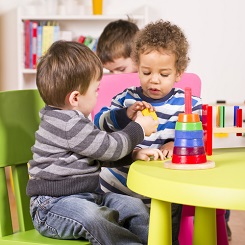 When it comes to making your way through life, developing your emotional intelligence (also referred to as your EQ) can be just as important as cultivating your intellectual ability (or IQ). Although everyone is born with a certain personality and way of seeing the world around them – some kids might be scorekeepers out to get their due, some might be naturally empathetic and attuned to others’ feelings – it’s important to teach them certain skills and help them develop the ability to identify, understand and manage their emotions in a positive way. After all, a toddler won’t see much logic in handing over the toy they want to continue playing with to another child unless they are taught the importance of sharing and how it makes other people feel when we’re generous to them – and when we’re not.
Annie Fox, M.Ed. and author of Teaching Kids to Be Good People and Too Stressed to Think?, calls this Character Education. “Emotional Intelligence, aka Character Education, helps children understand their own feelings and be respectful of the feelings, ideas and opinions of others. Building EQ skills is also about taking the time to think, reason and reflect before making decisions.”
This could translate to getting down on a young child’s level and speaking to them about feelings. In the situation of a shared toy, or even a shared friend as they get a little older, recognize their feelings and what they want, but also point out how the other friend might be feeling sad they can’t play with the toy or friend, too. Use questions such as “how do you think they feel?” and “how would it make you feel if that happened to you?” to let them make the connection and give the child positively reinforced confidence about deciphering emotional situations while building their empathy. Then, guide them to discovering a solution (what do you think we could do to make this better?) and point out the benefits of generosity (it feels good to do nice things for others, I’m so proud of you for being thoughtful, it’s more fun to play together, more friends mean more game options, etc.).
For a tween in your care, EQ development gets a little trickier. Hormones, social growing pains, school adjustments and outside stresses all work against EQ development. Annie Fox has created a five part plan for classroom use that translates nicely into a conversation starter at home with an end goal of creating a supportive and caring child (and hopefully a positive network of friends to hang out with).
Step One: “Understand the meaning of the word RESPECT and how mutual respect increases emotional and physical safety.” Talk about what it means to be respectful and feel respected, how disrespectful words or acts can hurt feelings and damage relationships (whether teacher-student, parent-child or friends) and how simple things like manners, tone of voice, eye contact, listening to others, not gossiping and keeping secrets are all opportunities to show respect (or lack of).
Step Two: “Define stress (a feeling of being off-balance). Examine what causes different people to feel stressed.” Stress is a reality for tweens. Academic requirements, competitive sports, friendship circle woes and responsibilities at home can all cause stress. Discuss what being “stressed” means to them and what causes it in their life. Talk about how it feels when someone close to them intentionally creates a stressful situation, such as little brother or sister hiding their school book to get a rise out of them, a close friend teasing them about a secret crush, etc. Talk about how to recognize stress in others and how to avoid triggering it. For instance, it might seem funny to joke about a blown note in the band concert, but that friend might stress about playing in public.
Step Three: “Understand the symptoms of stress on your body and emotions.” Talk about the physical and emotional results of stress. Ask about what they experience. Do they get stomachaches, want to withdraw and be alone or get angry? Just like the little one with the toy, talk about how friends or other people they connect with might feel when stressed. Learning to recognize that a teacher might yell when they are overwhelmed by a class who is acting up, a parent might blow up over dirty dishes when they are worried about something at work, or a friend might cancel plans to be alone when school’s not going well, increases EQ.
Step Four: “Understand how stress can affect behavior in negative ways. Making decisions while stressing can lead to regrettable outcomes.” Talk with the child about making bad decisions when overwhelmed and how difficult it can be to think clearly under pressure. Discuss how regretful moments and decisions might have been triggered by stress. Learning that freaking out when you’re stressed is normal and understanding the importance of seeking calm before acting will help them understand their own actions and perhaps those of their friends.
Step Five: “Introduce re-centering breathing as a de-stressor. Practice breathing while role-playing stressful situations and notice the effects.” Learning calming methods and breathing exercises as tools interrupts the building pressure and chaos and gives kids a moment to regroup before responding in a clearheaded manner. They can then share these methods with close friends.
Posted in Uncategorized | Comments Off on How to Develop Your Child’s EQHow to Deal with a Sense of Entitlement in Your Charges
February 17, 2014 Let’s face it; nannies often work for parents that can afford to send their children to private schools, enroll them in the best activity programs and fulfill most of their wants and wishes. This doesn’t automatically lead to a sense of entitlement, though; there are plenty of privileged kids that don’t fall into that trap. However, it often does factor into a child’s feelings of having the right to have whatever he wants. So what can you do to combat this? Here are some ideas to help kids become more grounded and less entitled.
Focus on the rewards of effort. Many times, kids that have a strong sense of entitlement don’t see the value in hard work. They’re not used to investing their time and energy into achieving a goal, they’re used to things being done for them and being able to simply step in and enjoy the final result. One way to combat this sense of entitlement is to give kids ample opportunities to see the rewards of their efforts. Rather than do things for them, find ways to engage them in the doing. Expect them to contribute, to carry their own weight and to help out. Once they feel the pride and esteem that comes with pitching in, their sense of entitlement will start to evaporate.
Introduce them to the idea that there are others who are less fortunate. There’s a good chance your charge doesn’t understand in any real way that there are people who struggle to have the basics in life. While you naturally will want to protect your charge from the harshness of life, helping him understand there are others who are in need is a surefire way to quash an attitude of entitlement. Search out volunteer projects for children that you can get your charge involved in. Younger kids may like sorting through and donating gently used toys to needy children or setting up a lemonade stand to raise money for cancer research. Older children may like helping stock the local food pantry or putting together and passing out care packages for the homeless. Whatever the project, talk with your charge in age appropriate language about the challenges others face and how lucky you and he are to have the many blessings you do. Outline how the work you’re doing is helping them meet those challenges and impacting their lives.
Work together to develop a chore chart. It’s important that your charge learns that being part of a family means pitching in – and not just to earn something he wants, but simply because there are things that need to be done to keep things running and everyone has something worthwhile to contribute. Sit down with your charge and develop a list of things that he would like to do (or like to do more than others) to help out. The list could include helping with the laundry, setting the table, taking out the trash or any number of other things. By having your charge take part in the decision making process, it will be easier to get him to follow through. Your charge will soon learn that his contribution is valuable and the work he does for others really does make a difference. This understanding is an important factor in your charge’s self-esteem and chips away at his feelings of entitlement.
Model the attitude of gratitude. Being grateful for the things we have in our lives is one of the easiest ways to battle the entitlement dragon. By modeling a grateful attitude to your charge, you’ll pass along this very important message. Share with each other what you’re grateful for each day, help her start a gratitude journal or create a gratitude jar that the whole family adds to. By focusing on what she already has, she’ll slowly let go of always wanting more and more.
Share the lesson of money. Many kids don’t value what they have because it seems that those things have little value to those around them. There are no consequences for treating personal property poorly. Broken toys, torn clothes and lost equipment are quickly replaced. To stop this trend, work with your employers to set up an allowance or earning system for your charge. This doesn’t mean your charge has to earn all his things or that parents and other family members can’t indulge him. It simply means that he has to take responsibility for certain things and earn the money to purchase the item or to replace it if it’s lost or damaged. Making him responsible for a few things that are important to him will help him value those things in a real world way and appreciate the money it takes to purchase them.
Posted in Uncategorized | Comments Off on How to Deal with a Sense of Entitlement in Your ChargesEnding the Sibling Rivalry: How to Teach Your Children to Get Along
December 29, 2013 Thrust into a situation of constant time together and expectations of sharing can cause disagreements and arguments between siblings of any age, even if they are normally the best of friends. Parents and nannies alike often witness the clash of personalities and tiffs children have about everything from toys to friends, clothes and even attention.
Realizing that sibling disputes are common is helpful, but trudging through a day of constant bickering can rattle the nerves of the entire family. When siblings become rivals, it’s time to launch activities, games and techniques to squelch the disputes and teach them how to get along.
Understanding the Rivalry
According to Dr. Jonathan Caspi, professor of family and child studies at Montclair State University, dismissing sibling rivalry can cause more harm than good. “Most people see aggression between siblings as an unavoidable, normal and ultimately harmless aspect of child development, yet it can often cause social adjustment and behavioral problems, some of which may be severe and even precursors to other forms of violence,” he says.
One of the primary reasons siblings fight is shared space, says Caspi, especially if they share a bedroom. Parents and nannies can expect conflicts over toys, remotes, television shows and the need for privacy. The day-to-day conflict will exist, but parents and nannies should seek to understand the underlying problem prompting sibling rivalry.
“Constant bickering has more to do with family dynamics and how parents are involved in sibling relationships,” says Caspi. “There is often a perception of favoritism and a lot of times, parents don’t see it, but kids do.”
Caspi suggests parents take the opportunity to praise good behavior between siblings often to provide the attention children need and to model the examples of what type of behavior is expected.
Techniques for Sibling Bonding
When siblings are at odds, it helps to show them the importance of both their differences and similarities. Caspi recommends helping your children operate as a team. Games work especially well with younger children with competitive natures.
Create a family-based trivia game with questions about each individual child. Questions can range from favorite foods and colors to best family vacation destinations, likes and dislikes. As your children work together to answer the questions, they will learn how to cooperate with each other and learn something new about their siblings at the same time.
When cooperating is a challenge, encourage your children to express themselves with positive statements versus negative accusations or the blame game. If disagreements are in full swing, ask your children to sit next to each other and write or say positive things about each other. It may seem awkward at first, but ultimately, when your witty seven-year old spouts off how he likes his brother’s funny faces at dinnertime, laughter is more likely to ensue than angry outbursts. This activity may also help each child think about the benefits of having a sibling – an instant playmate – on hand at all times.
Encouraging support in each other’s interests and activities can help build and strengthen sibling bonds, too. If one child has an interest in soccer or football, take the entire family to a professional game so siblings can learn more about the sport. If one child is a natural artist, enlist all children in an art workshop or ceramics class so they can try their hand at a sibling’s passion.
When siblings express interest in each other’s hobbies and activities, it can prompt more understanding and less competition, says Jeanette Smith, Florida-based family therapist. “Let one child feel like the most competent violinist and the other the most competent pianist,” she says. “Don’t pit them against each other so they can excel on their own without taking something away from the other.”
Proceed With Caution
When encouraging activities together, it’s important for parents and nannies to be extremely cautious to avoid comparing their children to each other. “Never use one child’s behavior to motivate another child’s behavior,” says Smith. “The children will come to resent one another and then fight because they truly don’t like being compared.”
If sibling rivalry leads to moments of aggression or belittling behavior, it’s time to step in and address the behavior immediately. “If harm is being done through constant belittling, parents need to intervene, stop the behavior and give them the substitute behavior,” says Caspi. “In many instances, a child who says “you’re stupid” is trying to communicate that he needs his own space right now. Regardless, restraint needs to be taught and children need to know that those actions are not acceptable.”
Good behavior needs to be taught, says Caspi. “Parents expect that kids know how to behave well,” he says, “but good behavior needs to be taught.”
In addition, listen closely to your child’s concerns or feelings about his or her siblings. According to Caspi, kids experience jealousy and perceive favoritism with their siblings. “These feelings have to be taken seriously,” he says. Take the opportunity to launch an open discussion and validate your child’s feelings. If necessary, set up an action plan to spend one-on-one time together with each child so that they feel valued as an individual.
Posted in Uncategorized | Comments Off on Ending the Sibling Rivalry: How to Teach Your Children to Get AlongShopping for Kids: Ways to Be Frugal Without Skimping
December 19, 2013 Let’s face it: Kids are expensive. It seems like you buy a new pair of shoes one week, only to have your children outgrow them the next. From clothes and hygiene accessories to food and produce, your children deserve the best, but how can you provide quality necessities without breaking the bank?
The key is to adopt a frugal shopping routine that will get you more bang for your buck without skimping on quality.
Scouting for Deals
When shopping for kids, it’s important to scout out the deals so you can provide more or better quality items to meet their needs. According to Rachel Holland, creator of SurvivingtheStores.com, deals are in abundance at every retail outlet. “You might have to wait for the right time to buy, but there are low prices in every market,” she says.
Putting your fingertips to the test may be your best option. Download mobile apps with instant coupons or deal alerts to keep costs down when shopping for clothes, groceries or that “I have to have it” toy for your children. Many apps and online savings sites allow you to customize your search or enroll in alerts for specific items. This way, the deals come to you before you even head to the store.
Online promo codes can also save you a bundle when shopping for clothes, shoes and baby accessories. Avoid paying full price for name-brand clothes by shopping at consignment shops for lightly-worn clothes, shoes and even toys.
According to Jeanette Pavini, household savings expert for Coupons.com, resale shops are hands-down the best way to save on all baby items. “From sleepers to strollers and everything in between, resale shops have it,” she says. “Additionally, you can trade in the things your kids have outgrown and get a credit toward things you need.”
When shopping for your little ones, don’t forget to stake out specialty stores, too. “Specialty baby stores sell off last year’s models of strollers, car seats and other items for a deep discount,” says Pavini. “You won’t have this year’s model, but sometimes the only difference is the color.”
Clipping Coupons
One of the most common misconceptions about coupons is that the hassle is not worth the savings. With some organization and thoughtful reflection, coupons can allow you to find the best deals in town, says Holland. Start clipping and see the savings first-hand.
Holland recommends the following when clipping coupons for children’s and grocery items:
- Don’t use a coupon just because you have it
- Wait for a great sale before you use your coupon
- Use manufacturer coupons along with store-specific coupons for bigger savings
- Learn the grocery store sales cycles
“Forget about extreme couponing,” says Holland. “Realistic couponing only takes an hour a week and can really save you 50% or more on your grocery bills every month.”
According to Pavini, household savings expert for Coupons.com, a family of four can save approximately $50 each week when combining coupons with in-store ads. “Consumers need to look at coupons as ‘free money’ because that is exactly what it is,” she says. “Keep in mind coupons are not just for groceries anymore. Drug store items and personal care products offer excellent savings through coupons.”
Get Frugal With Groceries
One of the biggest expenses families face is the monthly grocery bill. Lower your expenses and feed your family well with frugal food choices, Holland says.
- Buy one whole chicken instead of one that’s already cut up
- Don’t buy already seasoned meat – season it yourself
- Check out your local butcher instead of the grocery stores. Many times their everyday price beats the store sales price.
- Only buy the fruits and veggies that are in season
- Check out the bulk food sections of the store. Sometimes not having it pre-packaged will save you a ton.
- Buy the roast that’s on sale and have the meat department grind it for you instead of buying the ground chuck that’s not on sale
- Substitute beans for meat or add some beans to your meat dishes to get the protein content up without the extra cost
When shopping for groceries, a common myth is that ‘bigger is better.’ Bulk buys, though, are not always the best buys. In fact, buying in bulk can lead to waste, says Pavini. “Buying in bulk only works if you will use everything before the expiration dates and before your kids get sick of the same box of cereal for the third week in a row,” says Pavini.
Getting the best bang for your buck involves planning. With some creative, cost-saving techniques, your children will have the necessities they need and then some.
Posted in Uncategorized | Comments Off on Shopping for Kids: Ways to Be Frugal Without Skimping10 Warning Signs in a Nanny Job Listing
December 18, 2013 To be fair, not everyone knows what a “nanny” is. New parents, or those looking to push the limits to gain the most value for their salary, might expect a nanny to be a caregiver, housekeeper, chef, household manager, tutor, personal shopper and chauffeur – all rolled into one. This might be fine, if the terms are detailed and agreed upon with appropriate compensation, but if you are solely interested in a child caregiving position, you can waste a lot of time sifting through ads to find the jobs that meet your needs.
To avoid taking a job that doesn’t meet your needs and expectations, use this checklist of 10 warning signs to watch for in nanny job listings.
No Referrals
This may be true, in the case of a newborn and first time parents. If so, ask for character references. You will be entering this person’s private space and you don’t want to endanger yourself or make yourself liable. They may be avoiding sharing references because they are difficult to work with and the former nanny left under negative terms.
Do Your Research
Ask for their full name. After all, you will be potentially meeting for your first in-person interview in their space. A quick internet search might tell you a lot more than a first impression, or at least let you go into the interview with pertinent questions that might need to be cleared up. If you decide to take the position, consider a background screening before committing to a long-term childcare relationship.
Lack of Honesty
Parents are bound to sing their children’s praises; it’s only natural to see your little ones in the best possible light. But if other falsehoods pop up (the first phone call reveals conflicting expectations from what they put in the ad – nanny bait and switch), be prepared for more serious issues to potentially be glossed over.
Many Poppins
If an ad sounds familiar, or too good to be true (private large apartment in the heart of NYC! extreme salary! huge perks!), a search using key terms mentioned might reveal a succession of ads for the same position, suggesting they might have trouble holding onto their caregiver (and that the salary might be that big for a reason).
Light Housekeeping
Light housekeeping means many different things to many people. If it’s a matter of cleaning up after the children’s eating mess, doing the dishes that you use during the day, or tidying the house from the pillow fort and line of cheerios trailing through the living room – that might be expected. It’s best to outline exactly what this means, though, to avoid unpleasant surprises or being underpaid for your efforts.
Trash-Talking
If the prospective employer is badmouthing the former nanny in the initial conversation, criticizing her work or other personal attributes, remember that could one day be you. Being publicly negative about someone in their employ speaks to their lack of character, and it might not even be true. A quick glance at social media accounts can be an eye-opener, and let you in on how they really view their nannies.
Vague Job Descriptions
This could be a problem, especially if they feel by answering and accepting the position you have agreed to be up for anything that pops up within their house – or it could just mean you need clearer communication (and a written contract outlining precise duties and expectations!).
Bad Vibe or No Click
Being a nanny is a very personal job. It is a profession, but it is one where you become intimate with another person’s home life and their child. If you do not feel comfortable with your employer or in the home you are expected to work within, there will be other positions that are a better match.
Varying Hours
This could mean just that, or it could be a sneaky way of trying to work around the Fair Labor Standards Act by treating you as a babysitter without regular employment. This could also lead to a situation where they feel you are on call, and responsible for covering at the last minute or being canceled without notice based on their whims or changes of plans.
Must Be Pet-Friendly
Does this mean dog and cat allergy sufferers need not apply? Those with phobias look further? That these pet-parents’ four legged children must feel as comfortable with those sharing their space as their two-legged kids? If so, that might be fine (and a sign of a thoughtful future employer). However, all too often, this is code for “must be willing to walk dog mid-day” and other assorted pet care needs that just “pop up”. If your plans for a position don’t include a pocket full of blue plastic doggie bags or getting nipped as you refill the bird’s food dish, ask for details and put the expectation in writing within your nanny contract.
Posted in Uncategorized | Comments Off on 10 Warning Signs in a Nanny Job ListingTeaching Children the Importance of Volunteering: Activities for Nannies and Children
December 10, 2013 As a primary caregiver, it is natural to want to raise a child who is focused on others and who has a sense of responsibility to society. Children, though, do not always naturally possess these traits, especially when living in a culture that caters to an “it’s all about me” ideology. Showing children how to be selfless versus simply telling them how to be selfless may be the key to unlocking the compassion within their hearts. As a nanny, you have the power to show children how to give of themselves through volunteering activities.
The Benefits of Volunteering
Volunteering can carry significant social benefits for children, says Dr. Mark McKee, psychologist and author of Raising a Successful Child: The Manual.
According to McKee, volunteering provides children with the opportunity to discover the world that extends beyond their small and protected environment. “It’s also an opportunity to give to others with no promise or expectation of return or reward and intrinsic rewards gained through the experience will be cherished for life,” he says.
Lending a hand to someone in need can heighten your child’s sense of self-esteem and self-worth while also providing an opportunity to possibly discover new career options on which to build aspirations, says McKee. “It’s an opportunity to truly appreciate their own advantages in this life and an opportunity to feel genuinely useful and appreciated, which are things many children never experience living in homes with abundant and at times, unlimited resources,” he says.
Jumping Right In
Although a sulky five-year old or bothered 13-year old may not immediately see the benefits of volunteering, it’s still important to show them through hands-on activities, all while turning a selfless act into a fun adventure.
Designate a specific day each week for volunteer activities and jump right in with one of the following acts of kindness:
- Collect children’s books from family and friends and donate them to a local hospital or library
- Sign up for a charity walk to benefit an organization or disease awareness
- Donate food to a food pantry by having your child pick out an item each time you shop for groceries
- Volunteer to serve meals to the homeless at a local shelter or food pantry
- Compile activity boxes, complete with puzzles, coloring books and games, to donate to a children’s center or children’s hospital
- Donate a few hours to picking up litter at local parks or roadways
- Visit a nursing home and offer to share your talents through musical entertainment or story time
- Deliver meals to the homebound (many food pantries offer these services)
- Take the kids along as you volunteer to drive an elderly neighbor to the doctor or grocery store
- Volunteer to feed, walk and care for abandoned animals at the local animal shelter
- Gather several classmates and friends to raise awareness and money to help refugee kids in schools around the world
- Recruit the entire family to tutor, mentor or read with younger children
- Work with the local Red Cross agency to give blood or organize a community blood drive
- Make cards, blankets and stuffed animals for sick children and donate to a local organization who provides care items to hospitals and children’s centers
There are unlimited options for volunteering, both locally and nationally, that you can take advantage of to show children how acts of kindness can significantly impact someone else’s life. Find even more opportunities and learn how to brainstorm and plan family volunteer trips with the PBS Family Guide to Volunteering.
While venturing out to volunteer activities, it’s important to let your child experience how giving can change someone else’s life while impacting his as well. “Having children volunteer helps them to get out of themselves,” says Carl Hindy, clinical psychologist in New Hampshire. “It teaches them social interest, empathy and awareness of others.”
Volunteering can also localize the need for help, when commonly children only see this as a “need” that exists far away from their home. “In volunteering close to home, in your own community, you can take back a sense of efficacy over your world,” says Hindy. “Serving a meal to a homeless person makes a huge difference for that person, and for you.”
Posted in Uncategorized | Comments Off on Teaching Children the Importance of Volunteering: Activities for Nannies and Children ← Older posts